
The holiday season is often portrayed as a time of joy, celebration, and family togetherness. But for many, it can feel quite the opposite. Rather than bringing comfort and joy, the holidays may awaken feelings of regret, sorrow, and profound loss. For those who have experienced the death of a loved one, the end of a relationship, or any significant life transition, the holidays can highlight what is missing more than what remains.
Grief is a natural and common response to loss. It reminds us of how deeply we loved and connected. But as natural as grief may be, it’s deeply painful. While grief is part of the human experience, it was never God’s design. Scripture teaches us that death and loss entered the world through sin, which adds a spiritual complexity to the grieving process. Because of this brokenness, grief is not a one-size-fits-all experience—it’s unique, personal, and often unpredictable.
Grief arises not only from the death of a loved one but from many kinds of loss: the end of a marriage or friendship, job loss, business failure, the loss of health, or even the loss of dreams or plans for the future. Whatever the source, grief touches the heart deeply, and the more significant the loss, the more intense the grief.
Understanding the Stages of Grief
In 1969, psychiatrist Elisabeth Kübler-Ross introduced the concept of the “five stages of grief,” originally meant to describe the emotional process of patients facing terminal illness. Over time, this model has been adapted to help people understand and navigate various types of loss:
-
Denial: A natural defense mechanism that buffers the initial shock. Denial helps us process reality at our own pace. We may feel numb, disoriented, or in disbelief, especially when loss strikes suddenly.
-
Anger: Often misunderstood, anger is a necessary stage. It can be directed inward or outward—at God, others, or the situation itself. Beneath the anger lies pain.
-
Bargaining: This stage includes attempts to regain control. We may find ourselves making promises or pleas to reverse the outcome: “If only I had done more…” or “God, if you let this change, I’ll…” But bargaining rarely resolves our pain—it merely delays it.
-
Depression: A quieter stage that signals deeper acceptance. It’s not a sign of mental illness, but a natural response to loss. Feelings of sadness, fear, and emptiness may surface as the weight of the loss becomes real.
-
Acceptance: Acceptance doesn’t mean we’re “over it.” It means we’ve stopped resisting reality. We begin to make peace with what has happened and find a new way to live with the absence.
The Grief Cycle: Nonlinear and Complex 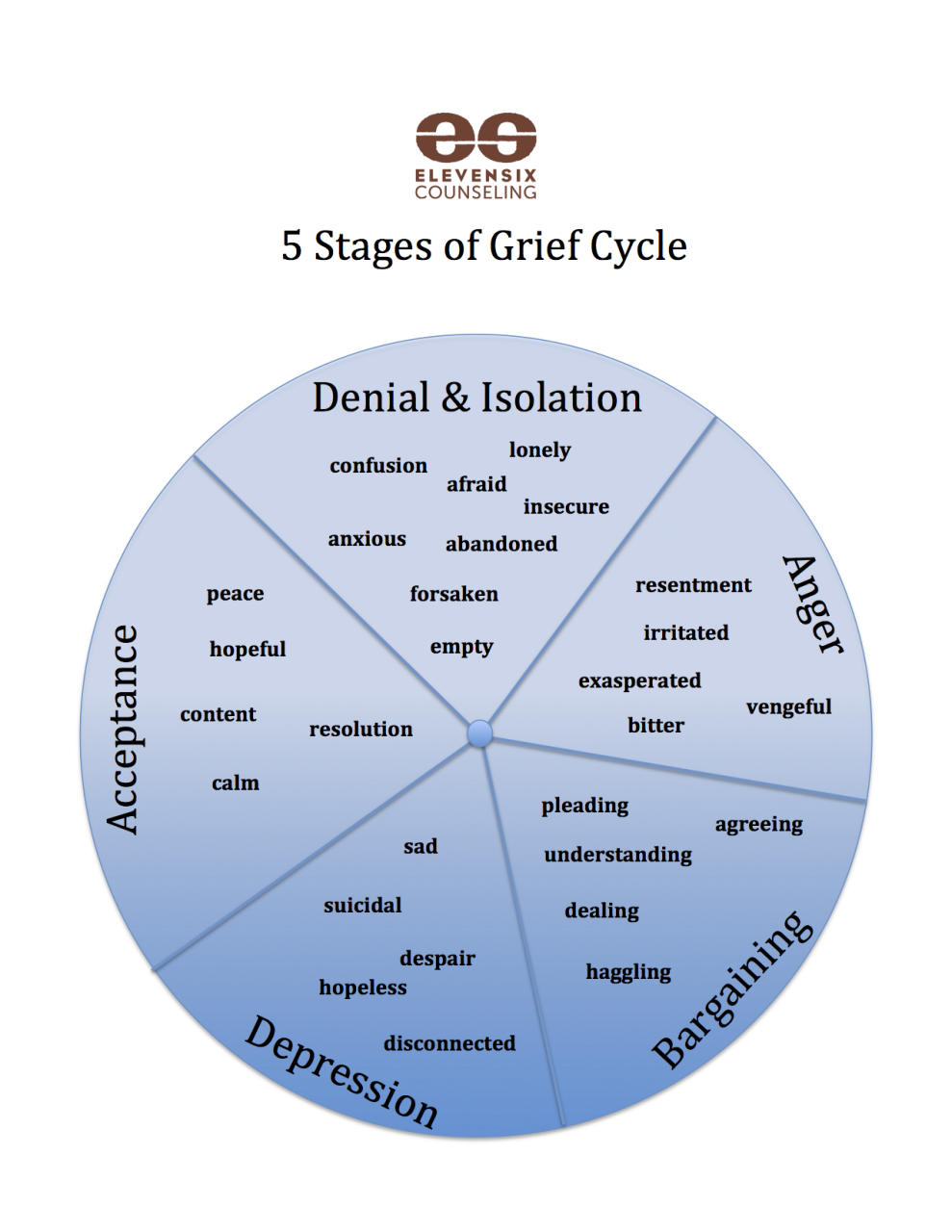
It’s important to remember that these stages are not linear. Grief is not a checklist to complete. People move in and out of these stages—sometimes revisiting one multiple times in a single day. This cyclical process can feel chaotic and confusing. We may accept one moment and deny the next. And that’s okay. Grief doesn’t follow rules.
What’s vital is allowing yourself to feel. Too often, people try to escape their grief through distractions, work, or even spiritual bypassing. But unacknowledged grief doesn’t go away. It lingers, grows heavy, and can resurface in harmful ways later.
Grieving with Others: The Power of Sharing
One of the most healing actions in grief is sharing. Sharing your pain with someone safe—someone who will listen without judgment—helps lighten the emotional load. In my own life, I’ve seen how powerful this can be.
I remember vividly when my best friend’s wife, Linda, passed away after battling breast cancer. The woman who once beamed with life had become physically unrecognizable in her final days. As her husband lovingly urged her to let go, we sat around her bedside in quiet grief. When she passed, I felt a surge of emotion—anger, disbelief, bargaining, and heartbreak all at once. I recall silently begging, “Come back. We would take you in any condition—just don’t leave us.” That was grief speaking.
But in that room, as we wept, shared our memories, and held one another, something happened: we began to accept. Her death was final, but her memory and our love for her endured. And in sharing our sorrow, we began to heal.
The Vulnerability of Grief
Grieving openly is not a sign of weakness—it is a courageous act of vulnerability. Vulnerability fosters intimacy and builds trust, especially within families and communities. When you allow others into your grief, you invite healing. When you share your tears, you honor your loss. As a therapist, I encourage clients to face their grief head-on. I remind them: the only way out is through it. Ignoring or suppressing feelings only prolongs the pain. Though frightening, walking into the storm of grief is the most direct path to healing. So, if you’re grieving this holiday season, know this: you’re not alone. It’s okay to cry, not feel festive, and say “no” to traditions that feel too heavy right now. Honor your loss, your feelings, and your journey.
Let others in. Let God in. And let yourself feel what needs to be felt. Healing may be slow. But with time, honesty, and community, it will come